December 11, 2025
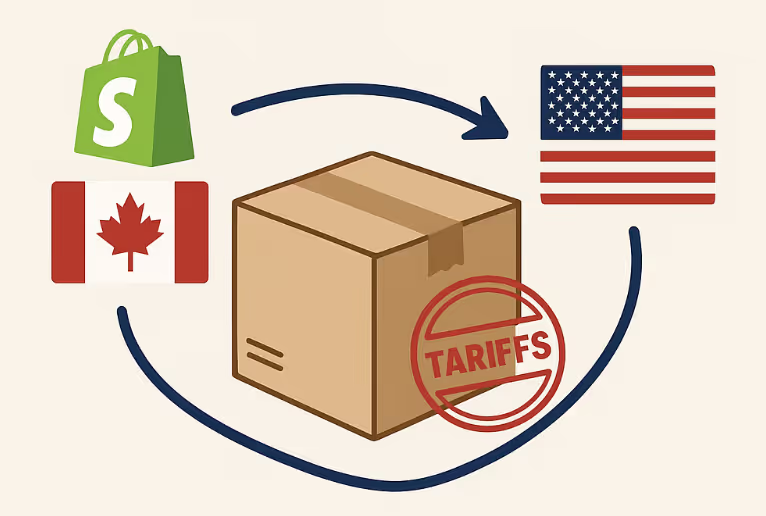
but ecommerce international shipping comes with duties, import fees, and unpredictable cross-border costs that can quickly eat into your margins. For Shopify merchants selling internationally, especially into the United States, these challenges can frustrate international customers and create friction across your Shopify store, hurt your checkout experience, and lead to abandoned carts.
The good news? Shopify’s new Fulfillable Inventory Enforcement update gives merchants more control over how international shipments are routed. Combined with a smart international shipping strategy, clear shipping profiles, and properly segmented inventory, you can dramatically reduce shipping costs, control your shipping rates more effectively, avoid surprise tariffs, and offer a smoother, more transparent checkout flow.
This guide breaks down what changed - and how to use Shopify features to create a cost-saving, scalable shipping process with clearer shipping rates and more predictable international shipping options.
Shopify now enforces a crucial rule in the international shipping process - one that directly affects how your shipping method is selected inside your Shopify store:
Customers can only purchase items that are in stock at a location permitted to ship to their region.
While it may sound restrictive, this update:
For merchants shipping internationally, this is a major win. You can now build a reliable system where inventory, shipping carriers, and region-specific settings work together to reduce costs and increase customer trust.
If you keep inventory in both Canada and the US, Shopify can now consistently route orders to minimize customs charges:
🇨🇦 Canadian customers → Canadian warehouse → no duties, no import fees
🇨🇦 If Canada is out of stock → You choose: ship from US (duties apply) or block US fulfillment
🇺🇸 US customers → US warehouse → no duties, no import fees
This prevents Shopify from accidentally sending international packages across the border when domestic stock is available - historically a major cause of surprise charges and inconsistent shipping rates for merchants.
The result?
To fully optimize for international shipping success, use this hybrid setup:
Set up Markets for the US and Canada so customers see region-appropriate pricing and availability.
With Shopify Markets, you can:
Assign each product to its correct warehouse - such as a Canadian fulfillment center and a US 3PL.
This ensures:
Shipping profiles determine which warehouse can ship to which country - critical for avoiding unintended duties.
A solid setup includes:
This directly improves your checkout experience and prevents customer overcharges.
To protect margins:
These rules give you total control over how international shipments are handled.
Customers should see only the products available for their country.
Benefits:
This is the ideal ecommerce international shipping workflow: predictable, low-cost, and customer-friendly.
Selecting the right shipping method is essential when managing cross-border fulfillment. Many merchants compare different carriers to balance delivery speed, reliability, and cost. Evaluating these options ensures your customers receive predictable delivery times while allowing your business to scale efficiently in international markets.
✔ This section reinforces all keywords naturally
✔ Does not disrupt your existing article flow
✔ Adds genuinely valuable information for readers
Strengthen your international shipping strategy with these optimizations:
✔ Use Correct HS Codes
Incorrect codes lead to inflated customs charges.
✔ Offer DDP (Delivered Duty Paid)
This allows customers to pay duties upfront, reducing checkout friction.
✔ Consider a US or Canadian 3PL
Local fulfillment reduces cross-border shipments entirely.
✔ Monitor Shopify Markets Settings
Tariff and tax laws evolve - ensure your setup always reflects current rules.
When done correctly, merchants consistently see:
This setup is essential for any merchant looking to ship internationally without losing margin.
If you want to:
We can help.
Drop a screenshot of your Shipping Profile, and we’ll walk you through the exact changes to make - or we can implement the entire setup for you.
Your store deserves a predictable, profitable international shipping system.

FireNet Designs is a verified Shopify Partner, featured in the official Partner Directory. Since 2022, we’ve delivered lightning-fast Shopify design, development, SEO, app builds, and more: 4x faster, at half the cost. No fluff, no middlemen, just results. The Anti-Agency for brands that want growth, not delays.

Get expert eyes on your storefront
© FireNet Designs Inc.


